This Level 3 damp survey examined a multi-storey residential property in Barnsbury (N7). The property owner instructed an independent damp specialist to evaluate localised upper-floor dampness. The assessment provided a complete diagnostic overview of the building’s envelope, roof drainage and internal moisture levels.
About the Issue
Localised damp patches appeared below the staircase window on the upper flight of stairs and at the top left corner of the top-floor front bedroom window. The homeowner worried that these symptoms indicated widespread structural decay, rising damp, or leaking internal pipes.
The Challenge
Commencing with a drone assessment at roof level, the surveyor examined high-level exterior detailing before conducting a systematic internal inspection downward through the building. The aim was to determine whether internal damp signs were linked to external maintenance defects.
The inspection revealed specific diagnostic facts:
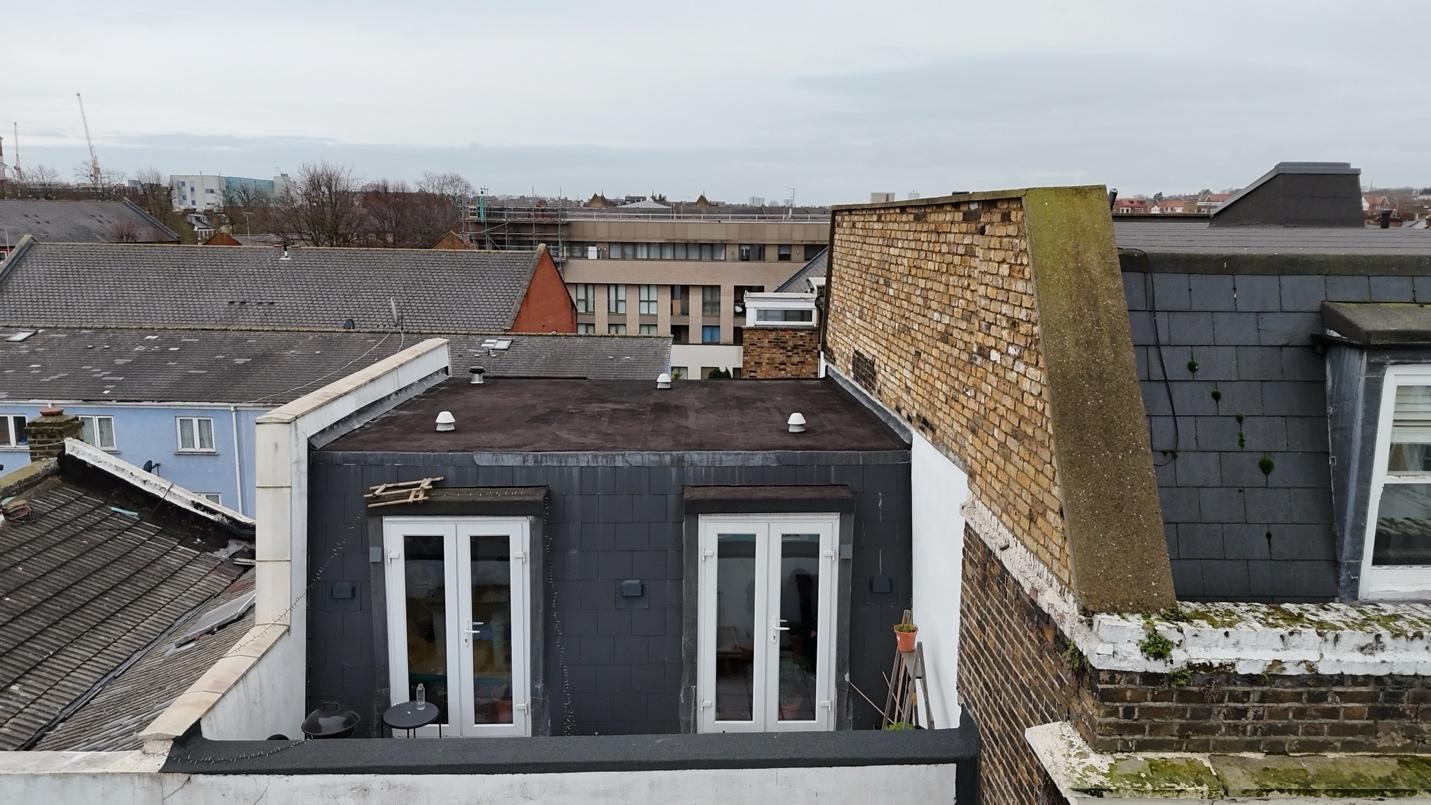
- Drone imaging identified that the top flat roof felt membrane was in very poor condition with loose flashings and unsealed joints, alongside a defective roof gully adjacent to the staircase wall.
- Inadequate drainage on the top-floor balcony resulted in standing water, while the top-floor bathroom extractor fan was non-operational (only the second-floor fan was working).
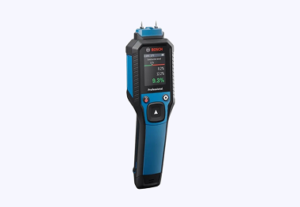
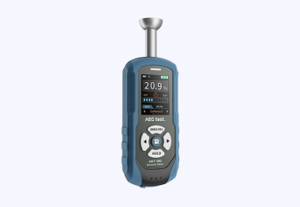
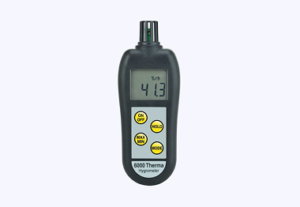
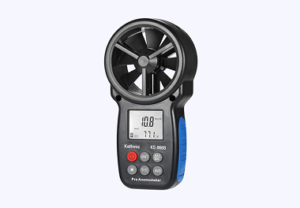
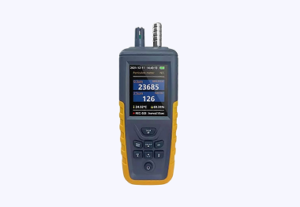
- A hygrometer reading confirmed indoor air humidity was within a satisfactory range and a ventilation flow test on the functioning extractor fan confirmed correct performance.
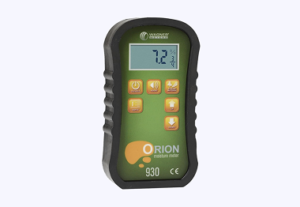
- Comprehensive testing confirmed zero evidence of wood rot or woodworm, no plumbing leaks, intact brickwork pointing, no structural movement and a fully functional DPC.
The findings proved that internal damp was caused by external defects. Moisture below the staircase window originated from the defective roof gully, while damp near the bedroom window resulted from failed window sealant, localised pointing defects and standing water on the balcony.
The Solution
The report detailed a practical action plan focused entirely on external building maintenance:
- Arrange for a qualified roofer to inspect the top flat roof, renew or reseal compromised felt joints, fix loose flashings and repair the defective roof gully and outlet.
- Inspect and unblock top-floor balcony drainage outlets to ensure water discharges away from the structure.
- Rake out and repair localised pointing defects while replacing failed external window sealant on the top-floor front elevation.
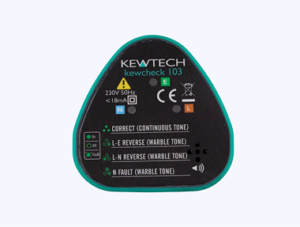
- Conduct electrical testing on the top-floor bathroom extractor fan to repair or replace it, ensuring external venting.
- Allow affected internal walls to dry naturally using normal indoor heating and ventilation, redecorating once moisture readings confirm acceptable dry levels (typically within a few weeks).
The Outcome
The property owner gained peace of mind knowing the building was structurally sound and free of wood rot. By identifying the exact exterior faults, the survey saved the owner from unnecessary internal damp proofing works or plaster tanking.
Why This Case Matters
Many contractors recommend invasive internal damp proofing when moisture appears on interior walls. An independent diagnostic survey inspects the entire building envelope—starting from the roof down—ensuring that external defects are corrected before any internal redecoration takes place.